$32,970 for a seat at the final: World Cup pricing brings anger — and subpoenas
Dynamic pricing has roughly tripled the record for a World Cup final ticket, fan groups put the cost of following a team at $6,900 minimum, and two US attorneys general want answers from FIFA.

For the first time, the World Cup is priced like a stadium concert tour. FIFA adopted dynamic pricing for 2026 — a first in the tournament's history — with no caps in the United States or Canada; only Mexico, Fortune reports, secured face-value limits for the matches on its soil. The principle is the airline's and the pop star's: a seat costs whatever someone will pay at the moment of asking. Applied to the most watched sporting event on earth, it has produced numbers that read like misprints.
Start at the top. The final is scheduled for July 19 at MetLife Stadium, and category-one tickets launched at face values between $2,030 and $6,730. By early May, Fortune reports, the best available seats for that match had climbed to $32,970 — roughly triple the previous high of $10,990. The distance traveled in a single cycle is hard to overstate: at Qatar 2022, four years and one pricing model ago, the most expensive seat at the final cost about $1,600.
The squeeze is not confined to the showpiece. Average ticket prices across the tournament are reported around $1,300, and even the cheapest seats at the final now sit near $10,000. On the resale platforms, The Conversation reports, dynamic pricing has pushed some final listings above $2 million — sums without precedent in the history of selling seats to this sport, attached now to a single chair for a single evening of football.
The longer view is the most damning, and it comes with arithmetic attached. The Conversation calculates that average prices have risen roughly 1,000% in inflation-adjusted terms since the United States last hosted the tournament, in 1994. Over the same period, median household income in the country has grown about 32% in real terms. Between those two numbers sits the whole controversy: the supporter's means have inched forward while the price of entry has multiplied — and something, or someone, has to give.
For the traveling fan, the costs compound match by match. Football Supporters Europe estimates that following one team from the opening game to the final costs a minimum of about $6,900 in tickets alone, Fortune reports — before a flight is booked or a bed is found, and assuming the cheapest available seat at every round. It is a floor, not an average — and it prices out precisely the supporters who have historically given the tournament its sound and its color.
FIFA's president is not apologizing. Defending the prices at the Milken conference, Gianni Infantino pointed to the host: the United States is the most developed entertainment market in the world, he said, "so we have to apply market rates." It was less a defense than a mission statement — the World Cup recast as premium entertainment inventory, priced like everything else competing for the American weekend.
The governing body also profits when tickets move on. FIFA's official resale platform charges 15% from each side of every transaction — close to 30% combined each time a seat changes hands, Fortune reports. Whether a ticket rises or falls on the secondary market, the house takes its share of the churn. It is, in effect, a toll collected in both directions.
Late May brought the strangest twist yet. Roughly 44,000 tickets reportedly vanished from FIFA's official portal and resurfaced on StubHub and SeatGeek — some listed below official prices, and in large contiguous blocks of seats, a pattern that does not resemble the scattered inventory of ordinary scalpers. This was not the familiar story of bots beating the queue; the blocks were too large and too tidy for that. Fans noticed. So did economists.
"Rigged by design," Wharton economist Judd Kessler said of the system. Florian Ederer of Boston University was similarly critical, and Victor Matheson of Holy Cross noted that he had predicted exactly this — that FIFA would quietly dump inventory onto secondary platforms. None of the three was describing a black market working against the system; they were describing, in their reading, the system itself.
Now the lawyers have arrived. In late May, the attorneys general of New York and New Jersey subpoenaed FIFA, Fortune and The Conversation report, probing alleged misrepresentation of seat locations and whether the phased release schedule artificially inflated prices. However those inquiries end, the central fact of this tournament is already fixed: the world's most popular sporting event will be its most expensive — the open question is who still gets to be in the stadium.
More stories

Mexico City holds its breath: schools shut and offices empty for the Azteca opener
Mexico meet South Africa on Thursday as the Estadio Azteca becomes the first stadium to stage three World Cup opening matches — and the capital all but stops for the occasion.
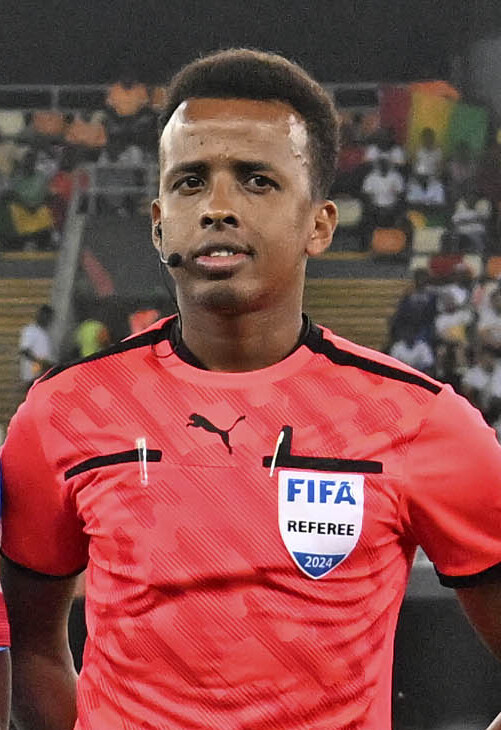
Africa's best referee is out of the World Cup after being turned away in Miami
Omar Abdulkadir Artan, CAF's 2025 referee of the year and set to become Somalia's first official at a men's World Cup, was refused entry to the United States days before the tournament.

Ice collars, heat chambers and a 40°C question: the World Cup braces for extreme heat
Studies flag more than a quarter of matches at risky heat levels, so FIFA has made cooling breaks mandatory in every game. Players' unions say it still may not be enough.