Africa's best referee is out of the World Cup after being turned away in Miami
Omar Abdulkadir Artan, CAF's 2025 referee of the year and set to become Somalia's first official at a men's World Cup, was refused entry to the United States days before the tournament.
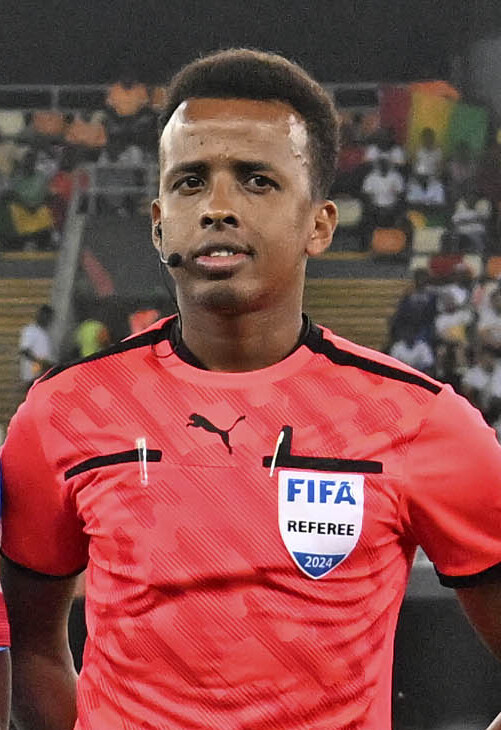
Omar Abdulkadir Artan will not be at the World Cup. The Somali referee, named Africa's best match official of 2025, flew from Istanbul to Miami on Saturday carrying a valid visa and one of the most coveted appointments in football — and, after what was described as an additional inspection at the airport, he was refused entry to the United States. On Tuesday, FIFA confirmed the consequence in plain terms: he will neither train nor officiate at the tournament.
Few officials arrived at this World Cup with a stronger case for being there. A FIFA-listed referee since 2018, Artan has spent the years since taking charge of the continent's biggest fixtures, including matches at the Africa Cup of Nations. In 2025, CAF named him Africa's best male referee — the continent's official of the year. The World Cup appointment that followed carried a significance beyond any one career: he was set to become the first Somali ever to referee at a men's World Cup.
That appointment was announced on April 9, when Pierluigi Collina and Massimo Busacca presented FIFA's officiating corps for the tournament: 170 match officials from 50 member associations — 52 referees, 88 assistant referees and 30 video match officials. It is the narrowest gate in the profession. Artan had passed through it on merit, eight years after first earning his place on the FIFA list — and his name on that sheet was already, before a ball had been kicked, a landmark for Somali football.
The road to the tournament ended at Miami International Airport. Artan landed from Istanbul on Saturday, June 7, days before the opening match, and was taken aside for what US authorities described as an additional inspection. When it concluded, despite the valid visa in his passport, he was refused admission to the country.
The official explanation has been brief to the point of opacity. US Customs and Border Protection said in a statement that the traveller "was determined to be inadmissible due to vetting concerns", and no specific public reason has been offered. The wording describes the mechanism rather than the substance: an inspection took place, a determination was made, and one of the tournament's 52 referees was out before a single training session, let alone a match.
Into that official silence has flowed a single heavier claim. An unnamed US official told American media that the refusal concerned an alleged "association with suspected members of terror organizations" — an assertion CBP has not formally confirmed, and one that exists, for now, only as an anonymous attribution in news reports. What sits on the record is context rather than explanation: Somalia is on the current US travel-ban list.
FIFA's confirmation arrived on Tuesday, and it was studiedly narrow. Artan, the governing body said, would neither train nor officiate at the tournament; beyond that it observed only that "FIFA is not involved in host country immigration processes". The sentence is accurate, and it is also a boundary line — the organisation that appointed him to the World Cup regards the question of whether he may enter the country staging it as somebody else's file.
Others have been blunter. Ciise Aden Abshir, an adviser to Somalia's sports ministry, said the decision "harms not only him personally but also undermines football's commitment to fairness, merit and the spirit of fair play". The criticism has carried well beyond the sport: Hillary Clinton called the refusal "terribly backward". Between those two reactions — one institutional, one political — sits an uncomfortable fact: the case now belongs to the story of the tournament, days before its first match.
The man at the centre of it has been its calmest voice. Artan has said that, despite the circumstances, he remains in a positive mood and focused on the next challenges, and he has thanked FIFA and CAF for their support. It is the answer of a professional whose trade is absorbing decisions that cannot be appealed in the moment — though rarely has a decision sat so far beyond a referee's control.
What remains, in the end, is the contrast this week has drawn. On April 9 his name was read out among the 170 officials chosen for the World Cup; two months on, an airport inspection ended his tournament with no public explanation beyond a single phrase — "vetting concerns". His place was earned on the pitch and lost at a border desk. When the competition he was due to whistle at kicks off on Thursday, the man who was to become its first Somali referee will not be on the pitch.
More stories

Mexico City holds its breath: schools shut and offices empty for the Azteca opener
Mexico meet South Africa on Thursday as the Estadio Azteca becomes the first stadium to stage three World Cup opening matches — and the capital all but stops for the occasion.

Ice collars, heat chambers and a 40°C question: the World Cup braces for extreme heat
Studies flag more than a quarter of matches at risky heat levels, so FIFA has made cooling breaks mandatory in every game. Players' unions say it still may not be enough.

$32,970 for a seat at the final: World Cup pricing brings anger — and subpoenas
Dynamic pricing has roughly tripled the record for a World Cup final ticket, fan groups put the cost of following a team at $6,900 minimum, and two US attorneys general want answers from FIFA.