A camera on the referee and a voice in the ear: officiating gets its biggest World Cup upgrade
Body cams debut at a World Cup after the IFAB wrote them into the laws, and the new offside system flags margins beyond 10 centimetres straight to the assistant's earpiece.

When the tournament kicks off, television viewers will see a World Cup through a referee's eyes for the first time. Body cameras — trialled successfully at the 2025 Club World Cup in the United States and since written into the Laws of the Game by the IFAB — will be worn by officials throughout. A year ago this was an experiment confined to one summer competition; it now sits in the laws as permitted equipment, and it arrives at the sport's biggest stage as the most visible item on a long list of changes.
The obstacle was never the camera but the running. A lens fixed to an official sprinting after a counter-attack produces footage too shaken to broadcast, and that is the problem Lenovo was brought in to solve: stabilisation technology that cuts the motion blur and turns the first-person feed into a usable angle for television. Johannes Holzmüller, FIFA's Director of Innovation, presented the system at a virtual media roundtable held from the International Broadcast Centre in Dallas, with Lenovo's chief information officer Art Hu speaking alongside him.
Offside calls get the deeper overhaul. At Qatar 2022, the semi-automated system stepped in when the margin was more than 50 centimetres; this time the threshold tightens to anything beyond 10. The change sounds incremental and is anything but — it moves the technology from catching the obvious to ruling on margins that once kept stadiums waiting in silence.
The routing changes too. Clear offsides no longer detour through the VAR room: an audio alert lands directly in the earpiece of the on-pitch officials, and the assistant referee can put the flag up at once. Where the Qatar version still passed the call through the video room, this one trusts the measurement enough to tell the people on the grass first — the wait between a through-ball and a decision shrinks to the time it takes a flag to rise.
There is a boundary to the automation, and FIFA has been careful to draw it. The system rules on positional offsides only — the geometric question of where a player stood when the ball was played. Whether that player interfered with play or with an opponent remains a human judgment, as it always has been. The machine establishes the line; the officials still decide what happened on either side of it.
The machinery underneath is considerable. Every player at the tournament has been scanned in three dimensions, and the resulting digital avatars do double duty: they feed the offside system its positional data, and they populate the 3D replays broadcasters will lean on when a tight call needs explaining to an audience.
Around the avatars runs an optical net. Sixteen tracking cameras in each stadium produce more than 150 million tracking data points per match — enough to rebuild any moment of a game in three dimensions, which is exactly what the video officials will do, using the reconstructions for VAR reviews and for judging whether a ball has left the field of play.
Not all of the technology points at the officials. Football AI Pro, a generative analysis assistant, goes to all 48 teams on identical terms. Holzmüller's framing was plain: not every side can afford a large analyst staff, and handing every federation the same tool narrows a gap that budgets usually decide. Among the tournament's innovations it is the least photogenic — and arguably the one a smaller football nation will feel most directly.
One change needs no camera at all. Goalkeepers now have eight seconds to release the ball, up from the six the old law allowed, and the price of holding on is a corner kick to the opposition. It is a small-print amendment with a visible consequence: the slow stroll to the edge of the box, ball cradled, becomes a risk rather than a habit.
The people running all of it were named on April 9, when Pierluigi Collina and Massimo Busacca presented the largest officiating corps in World Cup history: 170 officials from 50 countries, six women among them. That number is already one short. Somalia's Omar Artan, Africa's referee of the year, was denied entry to the United States and will not officiate — a reminder, before a ball has been kicked, that the most instrumented World Cup ever staged still runs on people, and that people can be stopped at a border in ways no replay can review.
More stories

Mexico City holds its breath: schools shut and offices empty for the Azteca opener
Mexico meet South Africa on Thursday as the Estadio Azteca becomes the first stadium to stage three World Cup opening matches — and the capital all but stops for the occasion.
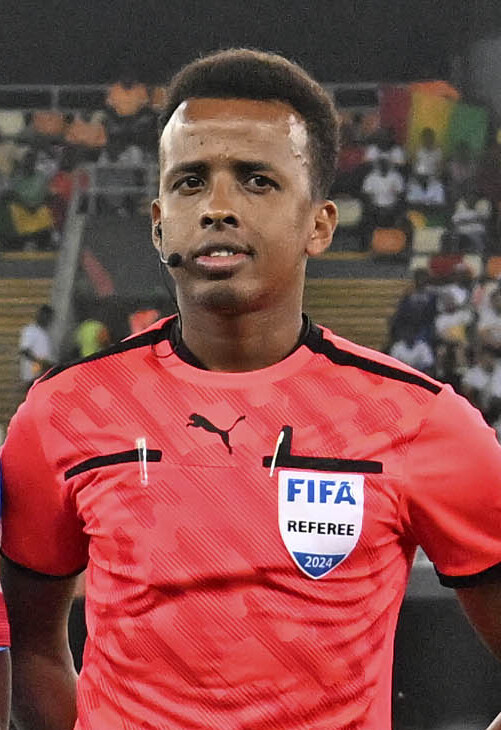
Africa's best referee is out of the World Cup after being turned away in Miami
Omar Abdulkadir Artan, CAF's 2025 referee of the year and set to become Somalia's first official at a men's World Cup, was refused entry to the United States days before the tournament.

Ice collars, heat chambers and a 40°C question: the World Cup braces for extreme heat
Studies flag more than a quarter of matches at risky heat levels, so FIFA has made cooling breaks mandatory in every game. Players' unions say it still may not be enough.