Fly in, play, fly out: Iran arrive at the World Cup under the tightest restrictions
Iran's players received US visas ten days before their opener, around 15 staff — including the federation president — were refused, and the squad will be based across the border in Tijuana.

Iran's World Cup began at five in the morning in Tijuana. The squad landed in Mexico shortly after 5am local time on Sunday, at the end of an overnight flight from Turkey, where they had trained for three weeks, Al Jazeera reports. There was no staged welcome, no slow adoption of a visiting team by a host city — just a plane arriving in the half-dark, and a group of footballers beginning the most tightly restricted campaign of this World Cup.
The geography alone tells the story. Iran's training base was originally planned for Tucson, Arizona; at the Iranian federation's request it was moved across the border to Tijuana, with security concerns cited, according to Goal and ESPN. The result is an arrangement without parallel at this tournament: a team whose every group fixture will be played on United States soil will prepare for all of them from Mexico, looking north at a country it cannot comfortably stay in.
The visas came late and incomplete. Iran's players received their US entry documents only on Friday — June 5, ten days before their opening match — Al Jazeera and ESPN report. Ten days is a thin margin for a federation trying to arrange flights, accommodation and matchday routines across two countries; until that Friday, all of it had to be planned in the conditional tense.
And the approvals stopped at the playing staff. Around 15 administrative and management officials were refused visas altogether, among them the federation president himself, Mehdi Taj, Al Jazeera reports. The squad can cross the border; much of the structure that normally surrounds a national team at a World Cup — the people who manage, organise and smooth the way — cannot.
Iran's response has been furious. The country's embassy in Turkey, where the squad had been preparing, called the staff denials "deliberate and discriminatory treatment" and demanded that FIFA, whose tournament this is, be held to account. The Iranian football federation went further still, describing the affair as "political interference in sport in its worst form."
Exactly what the players' visas allow is itself in dispute — even between Iran's own officials. Team spokesman Amir Mahdi Alavi had earlier described multiple-entry visas permitting the squad to arrive in match cities a day or two before games, the ordinary rhythm of tournament football. Iran's ambassador to Mexico, Abolfazl Pasandideh, describes something much harsher: conditions that force the team to "enter in the morning and leave the same day" for its matches in the United States, Al Jazeera reports. Between those two accounts lies the difference between playing a World Cup and commuting to one.
Washington is unmoved. A US State Department official said the necessary visas had been issued and that the United States "will not allow the Iranian team to abuse this system to sneak terrorists into the United States under false pretences." The reported concerns, according to Al Jazeera and Goal, centre on possible ties to the Islamic Revolutionary Guard Corps among members of the wider delegation. The message is blunt: the team may come, but it travels under suspicion.
Somewhere inside all of this, Amir Ghalenoei has a football team to prepare. Iran's coach must build a World Cup campaign around a routine no rival has to consider — training in one country, playing in another, with matchdays that could begin at a border post and end with a same-day departure. Recovery sessions, sleep, the small fixed rhythms a tournament squad depends on: all of it now has to be designed around the journey rather than the football.
The fixtures, at least, are set. Iran open Group G against New Zealand at SoFi Stadium in Los Angeles on June 15, return there to face Belgium on June 21, and close the group against Egypt in Seattle on June 26. Three matches in two cities — each of them to be reached from a base camp in a different country.
Somewhere underneath all of it sits a football tournament. Whether Iran's summer is remembered for what happens on the pitch at SoFi Stadium and in Seattle, or for what happened at the consulate, will be decided between June 15 and June 26. What is certain already is the shape of the campaign: a team that landed before dawn, a federation president denied a visa, and every match preceded by a border crossing no other squad has to make.
More stories

Mexico City holds its breath: schools shut and offices empty for the Azteca opener
Mexico meet South Africa on Thursday as the Estadio Azteca becomes the first stadium to stage three World Cup opening matches — and the capital all but stops for the occasion.
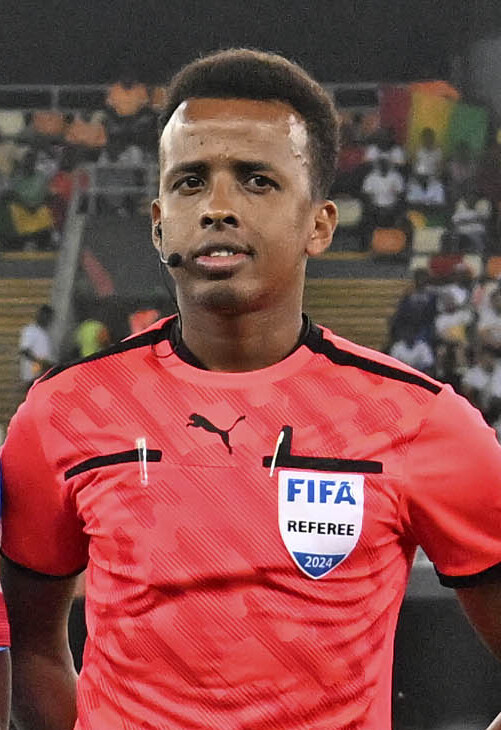
Africa's best referee is out of the World Cup after being turned away in Miami
Omar Abdulkadir Artan, CAF's 2025 referee of the year and set to become Somalia's first official at a men's World Cup, was refused entry to the United States days before the tournament.

Ice collars, heat chambers and a 40°C question: the World Cup braces for extreme heat
Studies flag more than a quarter of matches at risky heat levels, so FIFA has made cooling breaks mandatory in every game. Players' unions say it still may not be enough.